- FACIAL KITS
- 3D MUMMY MASK
- KOREAN GLASS SKIN CARE
- HYDRA FACIAL PRODUCTS
- FACE SERUMS
- DTAN & ALKALINE
- SEPARATE FACIAL PRODUCTS
- BEST SELLING PRODUCTS
- SUN PROTECTION, DAY & NIGHT CARE
- CTM KITS
- DTAN & ALKALINE
- BODY POLISHING KIT
- FACE MASKS & PACKS
- FACE SHEET MASK
- FACE TONERS
- FACE WASH & CLEANSERS
- MOISTURIZER, LOTION & CREAM
- NANO BASED SHEET MASKS
- VITAMIN C RANGE
- AMPOULES
Which Face Mask Is Suitable for All Skin Types? 7 Myths I Stopped Believing

Every few months, I ask my readers a simple question: “What confuses you most about skincare?” The replies change, but one message keeps coming back in almost the same words: which face mask is suitable for all skin types? Behind that question, there is usually a story. Someone bought a clay mask because a friend loved it and ended up with tight, flaky cheeks. Someone else tried a rich cream mask and woke up with breakouts.
I have realised that most of these bad experiences come from believing a few popular myths. So instead of giving you another generic list, I am going to bust the seven myths that confused me the most, and then answer which face mask is suitable for all skin types in a way you can actually use.
Myth 1: “Oily Skin Doesn’t Need a Hydrating Mask”
This is the myth I believed the longest. Oil and water are two different things. Oily skin can still be short on water, which is why some people have a shiny T-zone but cheeks that feel tight after washing. Skipping hydration does not reduce oil. It just leaves skin dehydrated and shiny at the same time.
So when I think about which face mask is suitable for all skin types, hydration comes first, and oil control comes second. A light, water-based essence suits an oily face just as well as a dry one. The only thing that changes is how often you use it.
Myth 2: “If It’s Natural, It’s Safe for Everyone”
“Natural” is a marketing word, not a safety certificate. Plant extracts and essential oils can trigger allergies just like synthetic ingredients can. Some of the most common skin reactions I hear about from readers come from “natural” products with strong fragrance.
“Suitable for all skin types” should mean gentle, balanced, and low-irritation, not simply “made from plants.” Whatever mask you choose, do a patch test: apply a little essence behind your ear or on your wrist and wait 24 hours.
Myth 3: “More Masks Means More Glow”
I have been there, putting on a mask every night for a week because I had an event coming up. My skin did not glow. It looked tired. A sheet mask is a boost, not a daily meal. One to two times a week is enough for most people, and sensitive or oily skin often does better with just once.
Time matters too. Fifteen to twenty minutes is the sweet spot. If you leave a sheet on until it dries out completely, it can start pulling moisture back out of your skin.
Myth 4: “A Clay Mask Is the Answer to Which Face Mask Is Suitable for All Skin Types”
Clay masks are popular for a reason: they are great at absorbing excess oil and making pores look cleaner. But that same strength is their weakness. On dry or sensitive skin, clay can feel stripping. Even on combination skin, it can be too much for the cheeks.
If I had to pick one format that stays comfortable across the widest range of faces, it would be a hydrating sheet mask, not clay. Clay is a great second mask for oily T-zones, but it should not be your first.
Myth 5: “Sheet Masks Are Only for Dry Skin”
Dry skin loves them, yes, but that does not make them exclusive. A gentle sheet mask delivers light hydration without leaving a heavy film. That is exactly why it often comes up when readers ask me which face mask is suitable for all skin types.
Here is how I suggest adjusting the same mask:
| Skin Type | Suggested Use |
|---|---|
| Normal | 1–2 times a week to maintain hydration |
| Dry | Up to 2 times a week for a hydration boost |
| Combination | 1–2 times a week for a balanced feel on the T-zone and cheeks |
| Oily | Once a week is enough for light hydration |
| Sensitive | Patch test first, then start slowly |
Myth 6: “A Higher Price Means It Suits Everyone”
A high price tells you about branding, packaging, and marketing. It tells you nothing about whether your skin will tolerate the formula. Some of the gentlest products I have used were mid-priced, and some of the most irritating were premium.
The real clue is on the label. Look for a short, hydration-focused ingredient list, and be careful with heavy fragrance and high-strength exfoliating acids.
Myth 7: “One Mask Can Completely Transform My Skin”
I wish this were true. A sheet mask can help your skin feel hydrated and soft, give dull skin a fresher look, and make a good prep step before makeup or an event. But glow also depends on sleep, water, sunscreen, and your overall routine. Results vary with skin type, lifestyle, and regular use, and any brand that promises otherwise is overselling.
The 5-Question Check Before You Buy Any Mask.
Before spending money, I ask readers to run through these questions. They are the fastest way to work out which face mask is suitable for all skin types in your own situation:
- Does your skin sting or turn red with new products? Choose a gentle sheet mask, patch test, and start once a week.
- Does your face feel tight after washing? You likely need more hydration, not less. Use it up to twice a week.
- Is your T-zone oily but your cheeks dry? Go for a light, hydrating mask and keep it to once or twice a week.
- Is your skin dull from sun, travel, or air conditioning? A hydrating sheet mask can give it a fresher look.
- Do you have an event coming up? Use a mask 20 to 30 minutes before makeup, then moisturize and carry on.
If you answered “yes” to anything, a hydrating sheet mask is a safe place to start.
Reading the Label Like a Detective
The A+ Advanced 3D Mummy Face Mask lists three ingredients that I find reasonable for everyday, gentle use:
- Peptides: Short chains of amino acids used in skincare to help skin look smoother and feel firmer with regular use.
- Hydrolyzed collagen: Collagen broken into smaller pieces that sit on the skin’s surface, helping it feel soft and hydrated. It conditions the surface and does not replace your body’s own collagen.
- Niacinamide: A form of vitamin B3 popular for supporting the skin barrier and the look of an even-toned complexion. It is generally well tolerated.
If you have allergies or a skin condition, always check the full ingredient list on the pack and speak to a dermatologist if you are unsure.
The Mask I Ended Up Recommending
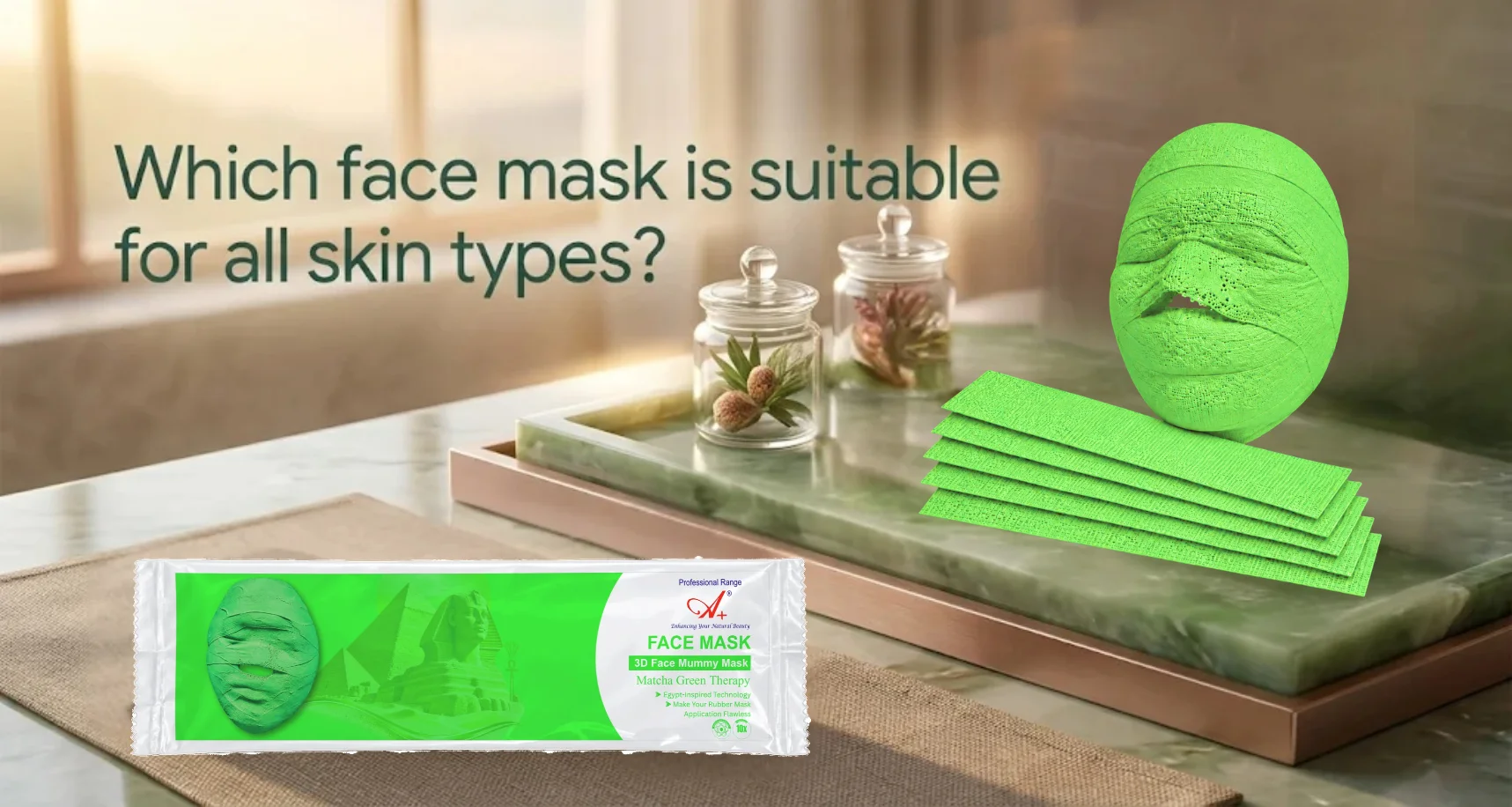
When I finally narrowed things down, the mask that made sense for a wide range of readers was a 3D nano sheet mask. The A+ Advanced 3D Mummy Face Mask is one example, designed to follow the contours of your eyes, nose, and jawline so the essence stays close to the skin. The “nano” formulation is designed so the essence spreads and absorbs smoothly, and the mask is priced at ₹549 on the product page (verify the current price before publishing).
It comes in 6 colours: [PLACEHOLDER: list the six colours with one line on each].
Is it the answer to which face mask is suitable for all skin types for every person? No product can promise that. But for normal, dry, combination, and oily skin, and for sensitive skin after a patch test, it is a gentle starting point, and that is what most readers are really looking for.
👉 See all 6 colours and today’s price: [A+ 3D Mummy Face Mask]
A Simple 4-Week Test Plan
The best way to decide which face mask is suitable for all skin types is to test it slowly:
- Week 1: Patch test only. Apply a little essence behind your ear or on your wrist and wait 24 hours. If all is calm, use one mask at the end of the week.
- Week 2: Cleanse, place the mask, relax for 15 to 20 minutes, peel it off, and pat the leftover essence into your face and neck. Do not rinse. Follow with moisturizer, or sunscreen in the daytime.
- Week 3: Add a second session only if your skin feels comfortable. Night time usually works best.
- Week 4: Check in with yourself. Is your skin feeling hydrated and soft? If yes, keep your routine. If you see redness, itching, or burning, stop and consult a dermatologist.
Avoid use on broken or burnt skin, active acne, or infections. Use each mask only once, keep it away from the eyes, and store it in a cool, dry place. If you are pregnant, check with your doctor first.
How 10 Popular Skincare Brands Compare
To give you a wider picture of which face mask is suitable for all skin types, I looked at ten well-known skincare brands. This table reflects general market positioning, not lab testing, so please check each brand’s current range and ingredient lists before you buy.
| # | Brand | Origin | Why People Choose It | Pick It If You… | Price Tier |
|---|---|---|---|---|---|
| 1 | Cetaphil | Switzerland (Galderma) | Gentle, dermatologist-recommended basics | Have sensitive or dry skin | Mid |
| 2 | Neutrogena | USA | Easy to find, hydration-focused lines | Want a trusted everyday name | Mid |
| 3 | The Ordinary | Canada | Simple, affordable actives | Like reading ingredient lists | Budget |
| 4 | Minimalist | India | Single-active, ingredient-led formulas | Treating one specific concern | Budget–Mid |
| 5 | Innisfree | South Korea | Nature-inspired K-beauty, sheet masks | Love Korean skincare | Mid |
| 6 | Laneige | South Korea | Water-based hydration, sleeping masks | Have dehydrated skin | Mid–Premium |
| 7 | Dot & Key | India | Fruity, glow-focused ranges | Want a fun, younger routine | Mid |
| 8 | Plum | India | Vegan-positioned, beginner-friendly | Are new to skincare | Mid |
| 9 | Mamaearth | India | Natural-positioned, widely available | Want easy family-friendly buys | Budget–Mid |
| 10 | Himalaya | India | Herbal, traditional-style care | Prefer simple, budget basics | Budget |
| ⭐ | A+ Professional Range | India | Nano-based 3D sheet masks, Korean glass skin care | Want a weekly glow ritual with a contoured sheet mask | Mid (₹549 for this mask) |
Quick FAQs
1. Which face mask is suitable for all skin types in summer?
A lightweight, hydrating sheet mask works well. Use it once or twice a week and follow with sunscreen if you use it in the daytime.
2. Can I wear a mask before a wedding or party?
Yes. Apply it 20 to 30 minutes before makeup, moisturize, then start your makeup.
3. Which face mask is suitable for all skin types if mine is sensitive?
Always patch test first and start with once a week. If you are unsure, ask a dermatologist.
4. Can I sleep with a sheet mask on?
No. Keep it on for 15 to 20 minutes only and remove it before it dries.
5. What about delivery and returns?
As per the website, shipping is free across India with express delivery. For returns, check the Returns & Exchange page.
Final Thoughts
If you remember only one thing from this post, let it be this: the question is not just which face mask is suitable for all skin types, but how you use it. Gentle ingredients, a patch test, the right frequency, and a little consistency matter far more than hype.
So the next time someone asks me which face mask is suitable for all skin types, my answer will be the same: start with a gentle, hydrating sheet mask, listen to your skin, and ignore the myths.
[CTA PLACEHOLDER 2]
👉 Ready to try a 3D nano sheet mask

