
- FACIAL KITS
- KOREAN GLASS SKIN CARE
- HYDRA FACIAL PRODUCTS
- FACE SERUMS
- DTAN & ALKALINE
- SEPARATE FACIAL PRODUCTS
- BEST SELLING PRODUCTS
- SUN PROTECTION, DAY & NIGHT CARE
- CTM KITS
- DTAN & ALKALINE
- BODY POLISHING KIT
- FACE MASKS & PACKS
- FACE SHEET MASK
- FACE TONERS
- FACE WASH & CLEANSERS
- MOISTURIZER, LOTION & CREAM
- NANO BASED SHEET MASKS
- VITAMIN C RANGE
- AMPOULES
Skin Barrier Repair: Why Your Skin Is Suddenly Sensitive, Dry & Irritated

Have you ever noticed that your skin suddenly feels dry, tight, itchy, red, or unusually sensitive? Maybe products that once worked perfectly now sting when you apply them. Your skin may even feel oily and dry at the same time.
These changes can sometimes be linked to a weakened or damaged skin barrier.
In 2026, skin barrier repair has become one of the biggest conversations in skincare. Instead of constantly adding stronger acids, exfoliants, and active ingredients, skincare routines are increasingly focusing on hydration, gentle cleansing, and supporting the skin's natural protective barrier.
But before choosing products for your skin, there's another important question to answer:
Do you actually know your skin type?
Understanding whether your skin is dry, oily, combination, normal, or sensitive can help you build a routine that suits your skin instead of simply following every skincare trend.
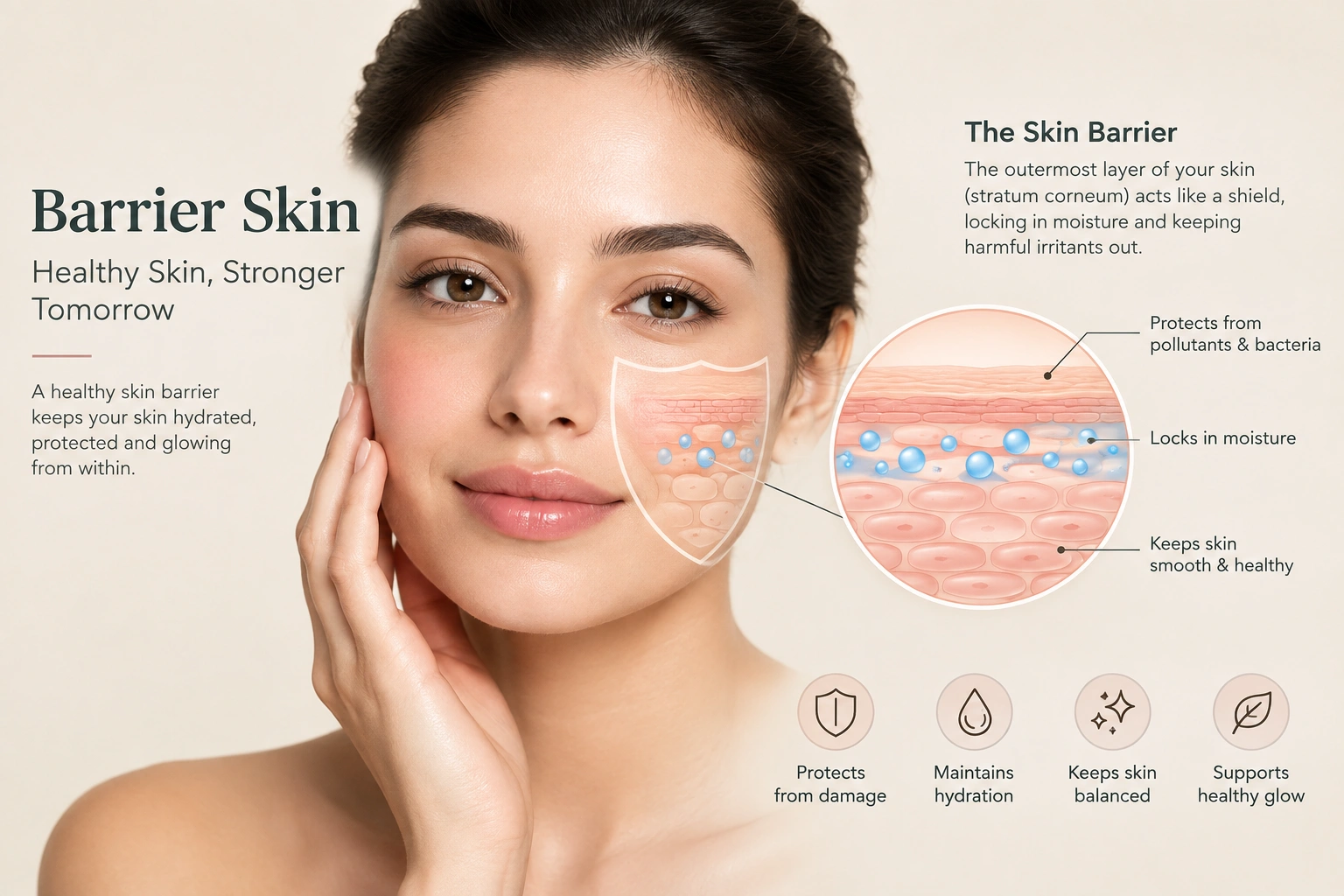
What Is the Skin Barrier?
The skin barrier is the outermost protective layer of your skin. Think of it as your skin's natural shield.
A healthy barrier helps your skin:
- Retain moisture
- Protect itself from environmental stressors
- Reduce excessive water loss
- Maintain a smoother and more comfortable appearance
- Tolerate skincare products better
The barrier contains skin lipids such as ceramides, cholesterol, and fatty acids, which help maintain its structure and moisture-retaining function.
When this protective system becomes compromised, moisture can escape more easily, and the skin may become increasingly dry, rough, or reactive.
How to Know Your Skin Type at Home
You don't always need complicated tests to get a basic idea of your skin type. A simple observation test can help you understand how your skin behaves naturally.
The Clean Face Test
- Wash your face with a gentle cleanser.
- Don't immediately apply serum, moisturizer, or other skincare products.
- Wait around 30–60 minutes.
- Observe how your skin looks and feels.
Now ask yourself:
Does your entire face feel tight, rough, or flaky?
You may have dry skin.
Dry skin generally produces less oil and may feel tight or uncomfortable, particularly after cleansing.
Does your entire face become noticeably shiny or greasy?
You may have oily skin.
Oily skin tends to produce more sebum, which can make the face appear shiny.
Is your T-zone oily but your cheeks feel normal or dry?
You may have combination skin.
The T-zone usually includes the forehead, nose, and chin.
Does your skin feel comfortable without excessive oiliness or dryness?
You may have normal skin.
Normal skin generally has a relatively balanced oil and moisture level.
Does your skin frequently sting, burn, become red, or react easily to products?
You may have sensitive or reactive skin.
However, sensitive skin isn't always a separate skin type. It can occur alongside dry, oily, or combination skin.
Important: Skin type and skin condition are not the same thing. For example, someone can have naturally oily skin but temporarily experience dehydration or irritation because of over-cleansing or excessive use of active ingredients.
7 Signs Your Skin Barrier May Be Damaged
Not every episode of dryness means your skin barrier is damaged, but several symptoms together can be a useful warning sign.
1. Your Skin Feels Tight After Cleansing
If your face feels unusually tight or uncomfortable immediately after washing, your cleansing routine may be too harsh for your skin.
2. Products Suddenly Start Stinging
A moisturizer or serum that previously felt comfortable may suddenly cause burning or stinging when your skin is irritated.
3. Increased Redness
Persistent redness or a flushed appearance can occur when the skin becomes more reactive.
4. Dry, Flaky or Rough Patches
When the barrier isn't retaining moisture effectively, skin can become visibly dry and rough.
5. Your Skin Feels Sensitive to Everything
If multiple products start irritating your skin, it may be time to simplify your routine rather than adding more treatments.
6. Makeup Doesn't Sit Properly
Foundation may cling to dry patches and emphasize texture when skin lacks sufficient hydration.
7. Your Skin Feels Dry Yet Oily
Sometimes compromised skin can feel dehydrated while still producing oil, creating a confusing combination of dryness and shine.
What Causes Skin Barrier Damage?
One of the biggest problems with modern skincare is doing too much at once.
Using multiple active ingredients doesn't automatically mean better results.
Common factors that can contribute to barrier disruption include:
Over-Exfoliation
Frequent use of scrubs, exfoliating acids or peeling products can irritate the skin when used excessively.
Too Many Active Ingredients
Using several strong actives together—or introducing new products too quickly—can increase irritation.
Harsh Cleansing
A cleanser that leaves your face feeling stripped or extremely tight may not be suitable for your skin.
Environmental Stress
Sun exposure, pollution, dry weather, and other environmental factors can place additional stress on the skin.
Constantly Changing Products
Trying a new skincare product every few days makes it difficult for your skin to adjust and can increase the chance of irritation.
How to Repair a Damaged Skin Barrier
The key isn't necessarily more skincare. In many situations, it's about creating a simpler and gentler routine.
Step 1: Start With Gentle Cleansing
Choose a cleanser that removes dirt, excess oil, and daily buildup without leaving your face feeling extremely dry or tight.
A+ Skin's Clarifying Cleanser can be incorporated into a cleansing-focused routine according to your skin's needs. The important thing is to avoid over-cleansing and pay attention to how your skin feels after washing.
If cleansing consistently leaves your skin feeling stripped or uncomfortable, reconsider the cleanser, frequency, or amount being used.
Step 2: Focus on Hydration
Hydrating ingredients can help improve the skin's moisture levels and make it feel more comfortable.
Look for ingredients such as:
- Hyaluronic acid
- Glycerin
- Panthenol
- Aloe vera
A+ Skin's Seaweed Hydrating Face Serum can also be considered when building a hydration-focused routine. A hydrating serum can be used between cleansing and moisturizing to add an extra layer of hydration.
The important point is to choose products according to your individual skin needs rather than adding multiple serums at once.
Step 3: Support the Barrier With Skin-Friendly Ingredients
Ingredients such as ceramides, fatty acids, and cholesterol are commonly associated with supporting the skin barrier.
Ceramides are naturally present in the skin and play an important role in maintaining its protective structure.
Step 4: Temporarily Reduce Strong Actives
If your skin is irritated, consider simplifying your routine rather than continuing to layer exfoliating acids, retinoids, and other strong actives.
Once your skin feels comfortable again, products can be reintroduced gradually depending on your individual needs.
Step 5: Moisturize Regularly
A good moisturizer helps reduce moisture loss and keeps the skin feeling soft and comfortable.
Step 6: Don't Forget Sunscreen
Daily sun protection is an important part of maintaining healthy-looking skin and protecting your skin from UV exposure.
A+ Skin Routine for Dry & Sensitive Skin
If your skin feels dry, tight or easily irritated, a simple and consistent skincare routine can be more beneficial than layering too many active products.
A+ Skin's range for dry and sensitive skin can be incorporated into a gentle routine focused on cleansing, hydration, soothing, moisturization and daily sun protection.
Step 1: Cleanse Gently
Start your routine with A+ Skin Hydrating Face Wash. A hydrating cleanser can help remove everyday impurities while keeping your cleansing routine focused on comfort rather than an overly stripped feeling.
Step 2: Add Lightweight Hydration
After cleansing, A+ Skin Calendula Skin Toner can be included as a hydrating step in your routine.
Toners aren't essential for everyone, but a suitable hydrating toner can be a useful addition if your skin enjoys an extra layer of moisture.
Step 3: Use a Targeted Ampoule
For the next step, A+ Skin Chamomile Ampoule can be incorporated into a routine designed for skin that needs hydration and a soothing-focused approach.
When your skin is sensitive or irritated, introduce new products one at a time instead of adding several products simultaneously.
Step 4: Lock in Moisture
Follow with A+ Skin Soothing Cream to provide a moisturizing step and help keep the skin feeling soft and comfortable.
For dry skin, moisturizer is especially important because maintaining adequate moisture is a key part of a barrier-focused routine.
Step 5: Finish With Sunscreen
In the morning, always finish your routine with sunscreen. Daily UV protection is an important part of maintaining healthy-looking skin.
Simple Skin Routine
Hydrating Face Wash → Calendula Skin Toner → Chamomile Ampoule → Soothing Cream → Sunscreen
Which Ingredients Are Best for Skin Barrier Care?
When choosing skincare for a barrier-focused routine, don't just look for the word "repair." Look at the ingredients.
Ceramides
Help support the skin's lipid barrier and moisture retention.
Hyaluronic Acid
A hydrating ingredient that helps attract and retain water.
Glycerin
A humectant that helps increase skin hydration.
Panthenol
Often used in skincare formulations designed to soothe and moisturize.
Aloe Vera
Commonly used in skincare for its soothing and hydrating properties.
Niacinamide
A versatile ingredient that can support the skin barrier while also addressing concerns such as uneven-looking tone and excess oil, depending on formulation and concentration.
Does Every Skin Type Need Skin Barrier Repair?
Yes.
Barrier care isn't limited to dry or sensitive skin.
Dry Skin
Focus on hydration and nourishing moisturization.
Oily Skin
Don't assume that oily skin doesn't need moisture. Over-cleansing can leave skin feeling dehydrated.
Combination Skin
Use lightweight hydration while adjusting moisturizer according to different areas of the face.
Sensitive Skin
Keep the routine simple and prioritize gentle, soothing products.
Acne-Prone Skin
Avoid automatically adding multiple harsh acne treatments at once. A balanced routine can help improve product tolerance.
Skin Type vs. Skin Barrier: What's the Difference?
This is an important distinction that many skincare beginners miss.
Skin type describes how your skin naturally behaves in terms of oil production.
Skin barrier condition describes how well your skin's protective outer layer is functioning.
For example:
- Oily skin can have a compromised barrier.
- Dry skin can have a healthy barrier.
- Combination skin can become dehydrated.
- Sensitive skin can experience barrier-related irritation.
This is why buying products solely based on the words "dry skin," "oily skin" or "sensitive skin" isn't always enough.
You should also consider your skin's current condition.
The Biggest Skin Barrier Mistake: Thinking More Is Better
Skincare has traditionally encouraged people to chase faster results with stronger products.
But healthy skin isn't necessarily about using the most active ingredients.
It's about finding the right balance.
If your skin is constantly dry, irritated, or uncomfortable, adding another exfoliant may not be the answer.
Sometimes your skin needs a reset: gentle cleansing, hydration, moisturization, and consistent sun protection.
That's why skin barrier repair has become such a significant skincare trend in 2026. The conversation is shifting from simply asking:
“What active should I use?”
to:
“How can I keep my skin healthy enough to tolerate my routine?”
5 Questions to Ask Before Buying Your Next Skincare Product
Before adding another trending product to your routine, ask:
- What is my actual skin type?
- Is my skin currently dry, dehydrated or irritated?
- Am I already using too many active ingredients?
- Does this product address a real skin concern, or am I buying it because it's trending?
- Can I introduce this product gradually instead of changing my entire routine?
These simple questions can help you build a more thoughtful skincare routine.
Final Thoughts
A healthy skin barrier is the foundation of comfortable, resilient-looking skin.
If your skin has suddenly become dry, sensitive, red or reactive, take a closer look at your routine before adding more products.
Skin barrier repair isn't about following another complicated trend. It's about going back to the basics: gentle cleansing, adequate hydration, moisturization, appropriate active use, and daily sun protection.
Understanding your skin type and your skin's current condition can make your skincare choices much easier. And when introducing products such as A+ Skin's cleansing and hydrating options, focus on how they fit into your overall routine rather than using multiple products at once.
Remember—persistent burning, severe redness, swelling, rashes, or ongoing skin problems should be evaluated by a qualified dermatologist rather than treated solely through skincare products.