
- FACIAL KITS
- KOREAN GLASS SKIN CARE
- HYDRA FACIAL PRODUCTS
- FACE SERUMS
- DTAN & ALKALINE
- SEPARATE FACIAL PRODUCTS
- BEST SELLING PRODUCTS
- SUN PROTECTION, DAY & NIGHT CARE
- CTM KITS
- DTAN & ALKALINE
- BODY POLISHING KIT
- FACE MASKS & PACKS
- FACE SHEET MASK
- FACE TONERS
- FACE WASH & CLEANSERS
- MOISTURIZER, LOTION & CREAM
- NANO BASED SHEET MASKS
- VITAMIN C RANGE
- AMPOULES
Plaster Face Mask: What It Is, How It Works, and Who Should Try It

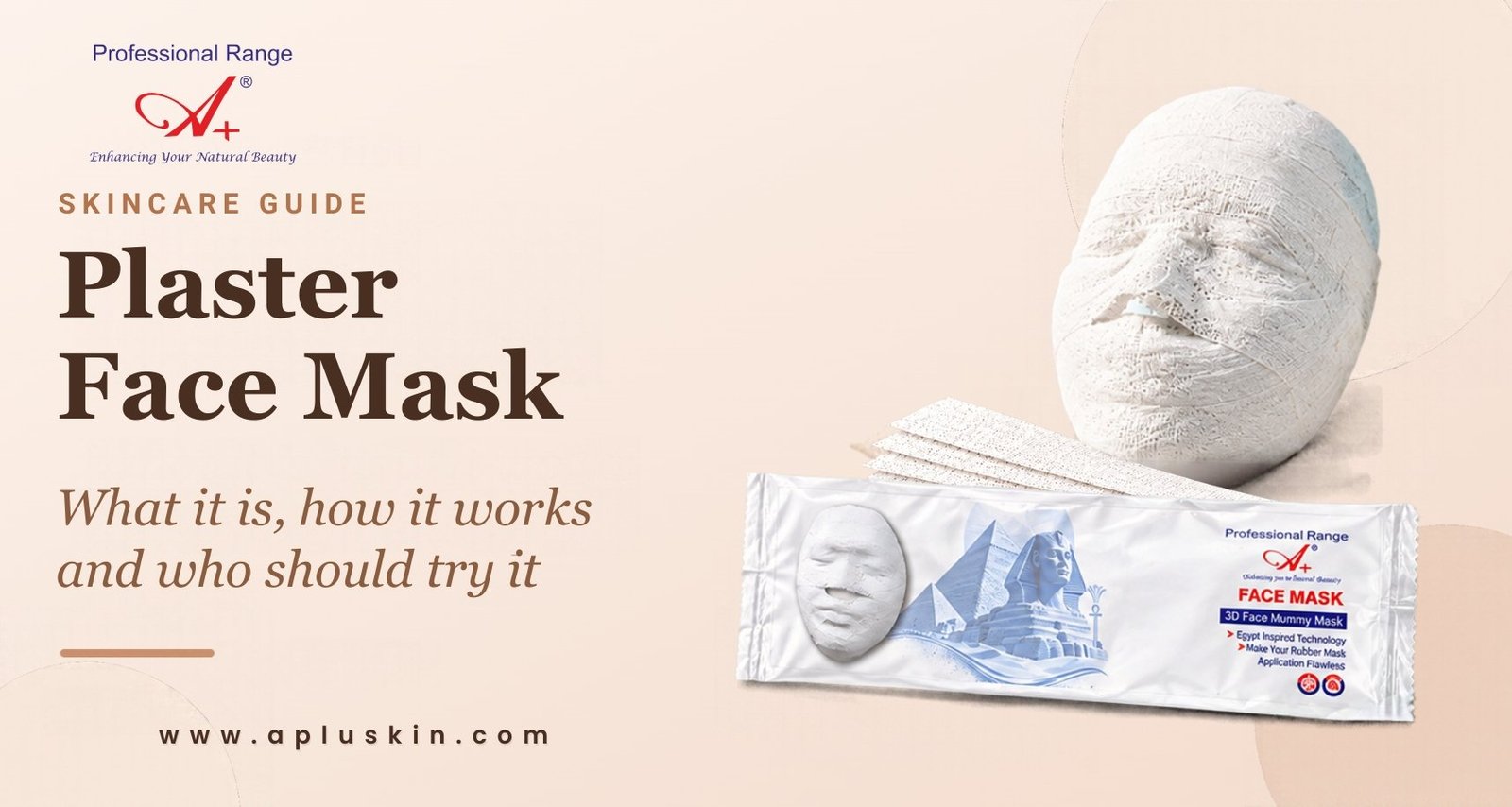
A plaster face mask is one of the most talked-about at-home facial treatments right now, and one of the most misunderstood. It looks dramatic, it sets into a firm shell, and it can feel pleasantly warm on the skin. But what is actually happening under that layer, and is it right for your skin?
This guide explains what a plaster face mask is, how it works, what it can realistically do, and how to use one safely at home.
What Is a Plaster Face Mask?
A plaster face mask is a water-activated facial mask that comes as a powder or strip. You mix it with water to form a smooth paste, spread it over the face, and let it set into a firm, structured layer. Once set, it is removed, and the skin is rinsed.
You may also hear it called a modelling mask or a mummy mask. The name comes from the way the set mask forms a shell that follows the shape of the face, much like a cast.
Unlike a sheet mask, which comes ready to place on the skin, a plaster face mask is prepared just before use. That preparation step is a big part of why it feels more like a salon treatment than a quick routine.
How Does a Plaster Face Mask Work?
There are three things going on while the mask is on your face.
1. It is mixed and applied as a paste. Water turns the powder into a spreadable paste that covers the face evenly, including the jawline and chin.
2. It sets. As the paste dries, it hardens into a rigid layer. Many plaster-style masks set through a reaction that starts once water is added, which is why some people feel a mild warming sensation. Not everyone notices it, and how warm it feels depends on the formula.
3. It forms a barrier. While the firm layer sits on the skin, it can limit how quickly moisture evaporates from the surface. Combined with skin-friendly ingredients such as aloe vera or plant oils, this may help the skin feel more hydrated and look smoother for a while after the mask is removed.
The key word is temporary. A plaster face mask is a cosmetic treatment. It can leave skin looking fresh and feeling smooth, but it does not permanently change the structure of the face.
Plaster Face Mask Benefits
Here is what a good plaster face mask can realistically offer:
- A hydrated, supple look: The barrier effect, together with moisturising ingredients, can leave skin feeling softer and more comfortable.
- A temporary smooth, firm feel: As the mask sets, many people notice a gentle tightening sensation, and skin can look smoother afterwards.
- Even full-face coverage: Because it is spread as a paste, it covers the whole face and jawline in one layer.
- A spa-style experience: The mixing, the warmth, and the setting time turn a skincare step into a short relaxation ritual.
- A quick pre-event refresh: Many people use one as part of a routine before special occasions, as long as they have already patch-tested the product.
What it does not do: It does not lift the face permanently, remove deep wrinkles, or treat skin conditions. Be cautious of any product that promises that.
Plaster Face Mask vs Sheet Mask vs Clay Mask
These masks are often confused, but they work in different ways.
Feature | Plaster Face Mask | Sheet Mask | Clay Mask |
|---|---|---|---|
Format | Powder mixed with water | Pre-soaked fabric sheet | Ready-to-use paste |
Preparation | Mix before applying | None | None |
Texture when on | Sets into a firm layer | Stays soft and wet | Dries and may crack |
Typical feel | Mild warmth, tightening | Cool, moist | Tightening, drying |
Main focus | Hydrated, smooth look | Quick hydration | Oil-focused cleansing |
Best for | Weekly treat or pre-event routine | Daily or frequent use | Oily or congested skin |
None of these is "best" for everyone. They simply do different jobs, and many people use more than one in a routine.
Who Should Use a Plaster Face Mask?
A plaster face mask can suit people who:
- Want a hydrating, spa-style treatment at home
- Have normal, dry, or combination skin and want a smooth, refreshed finish
- Enjoy a weekly self-care ritual
- Want a face mask that covers the face and jawline evenly
Who should avoid it or be extra careful
Skip the mask, or speak to a dermatologist first, if you have:
- Broken, cut, sunburnt, or freshly exfoliated skin
- Active irritation, rashes,s or a flare-up of a skin condition
- A known allergy to any ingredient in the product
- Recently had a cosmetic procedure
If your skin is sensitive, always patch test first. Apply a small amount of the prepared mask on a small area, such as behind the ear or on the inner forearm, and check for any reaction before using it on the whole face.
How to Use a Plaster Face Mask at Home
Always follow the instructions on your specific product. Quantities and timings differ between brands. In general, the steps look like this:
- Prepare. Tie your hair back with a headband and keep a towel nearby.
- Cleanse. Wash your face with a gentle cleanser and pat it completely dry.
- Mix. Add the recommended amount of water to a clean bowl, then add the mask powder. Mix quickly into a smooth, lump-free paste. Use the quantities on the pack.
- Apply. Spread an even layer over the face, jawline, and chin. Keep it away from the eyes, lips, and nostrils.
- Wait. Leave it on for the time given on the pack: [ 15 minutes]. Stay still and relax while it sets.
- Remove. Take it off gently as directed. Do not force or scrape it off.
- Rinse and finish. Rinse your face with water, then follow with a moisturiser. If you are going out during the day, apply sunscreen.
For most skin types, using it once or twice a week is plenty.
Common Plaster Face Mask Mistakes to Avoid
- Skipping the patch test. This matters most for sensitive skin and for any new product.
- Wrong water ratio. Too much water makes the mask runny, and too little makes it hard to spread. Stick to the pack instructions.
- Leaving it on too long. More time does not mean better results. Remove it at the recommended time.
- Using it on irritated skin. Wait until your skin has calmed down.
- Skipping moisturiser afterwards. A moisturiser helps lock in the hydrated feel.
- Overusing it. Using it too often can leave skin feeling uncomfortable.
- Using a dirty bowl or tools. Always start with clean equipment.
Where the A+ 3D Mummy Face Mask Fits In
If you would like to try this kind of treatment, the 3D Mummy Face Mask is a water-activated plaster-style mask designed to cover the face and jawline in one even layer.
Here is what makes it a good fit for a home facial:
- Infused with Aloe Vera Gel, Carrot Oil, and Sunflower Oil for a hydrated, nourished feel
- Unscented, so there is no added fragrance
- A mild warming sensation as it sets
- 5 strips in the pack (white), so you can build a routine
- ₹499, with free shipping across India
As with any new product, do a patch test first, avoid broken or irritated skin, and follow the directions on the pack. It is a cosmetic product meant to support a hydrated, refreshed look, not to treat any skin condition.
Want to see how this product works step by step? Read our detailed guide: How a 3D Mummy Face Mask Works.
Aftercare: What to Do After Your Mask
What you do after the mask matters as much as the mask itself.
- Rinse your face with water and pat it dry.
- Apply a moisturiser to support the hydrated feel.
- Use sunscreen the next morning, and during the day if you go out.
- Avoid strong exfoliants or harsh actives for the rest of the day.
- If your skin feels uncomfortable, stop using the mask and give your skin a break.
Frequently Asked Questions
What is a plaster face mask?
A plaster face mask is a water-activated facial mask. You mix the powder with water, apply it as a paste, let it set into a firm layer, then remove it and rinse. It is used for a hydrating, spa-style facial experience.
How does a plaster face mask work?
Once mixed with water, it spreads as a paste and then sets. The firm layer can limit moisture loss from the surface while it is on, and some formulas create a mild warming sensation as they set. Together with moisturising ingredients, this can help skin look smooth and feel hydrated.
How often should I use a plaster face mask?
For most skin types, once or twice a week is enough. Always follow the instructions on your product, and use it less often if your skin feels sensitive.
Is a plaster face mask safe for sensitive skin?
It depends on the formula and your skin. Do a patch test first, and avoid using it on broken, sunburnt, or irritated skin. If you are unsure, check with a dermatologist.
What is the difference between a plaster face mask and a sheet mask?
A sheet mask comes pre-soaked and ready to place on the face. A plaster face mask is mixed with water before use and sets into a firm layer, so it takes longer but offers a different, more spa-like experience.
Does a plaster face mask lift the face permanently?
No. It can create a temporary tightening feel and leave the skin looking smoother, but these effects are cosmetic and short-lived. It is not a substitute for any medical or cosmetic procedure.
Can I use a plaster face mask before an event?
Many people include one in their pre-event routine. If it is a new product, patch test it well in advance instead of trying it for the first time on the day.
Final Thoughts
A plaster face mask is a simple way to turn a skincare step into a relaxing, spa-style ritual. It will not work miracles, but used correctly, it can leave your skin looking smooth, fresh and well hydrated.
The basics are easy: patch test, mix the right ratio, apply evenly, remove on time,e and moisturise afterwards. If you would like to try one, the A+ 3D Mummy Face Mask is a good place to start.