- FACIAL KITS
- KOREAN GLASS SKIN CARE
- HYDRA FACIAL PRODUCTS
- FACE SERUMS
- DTAN & ALKALINE
- SEPARATE FACIAL PRODUCTS
- BEST SELLING PRODUCTS
- SUN PROTECTION, DAY & NIGHT CARE
- CTM KITS
- DTAN & ALKALINE
- BODY POLISHING KIT
- FACE MASKS & PACKS
- FACE SHEET MASK
- FACE TONERS
- FACE WASH & CLEANSERS
- MOISTURIZER, LOTION & CREAM
- NANO BASED SHEET MASKS
- VITAMIN C RANGE
- AMPOULES
3D Mummy Mask and Chamomile Algae Rubber Face Mask: A Complete Guide to Layered Facial Care

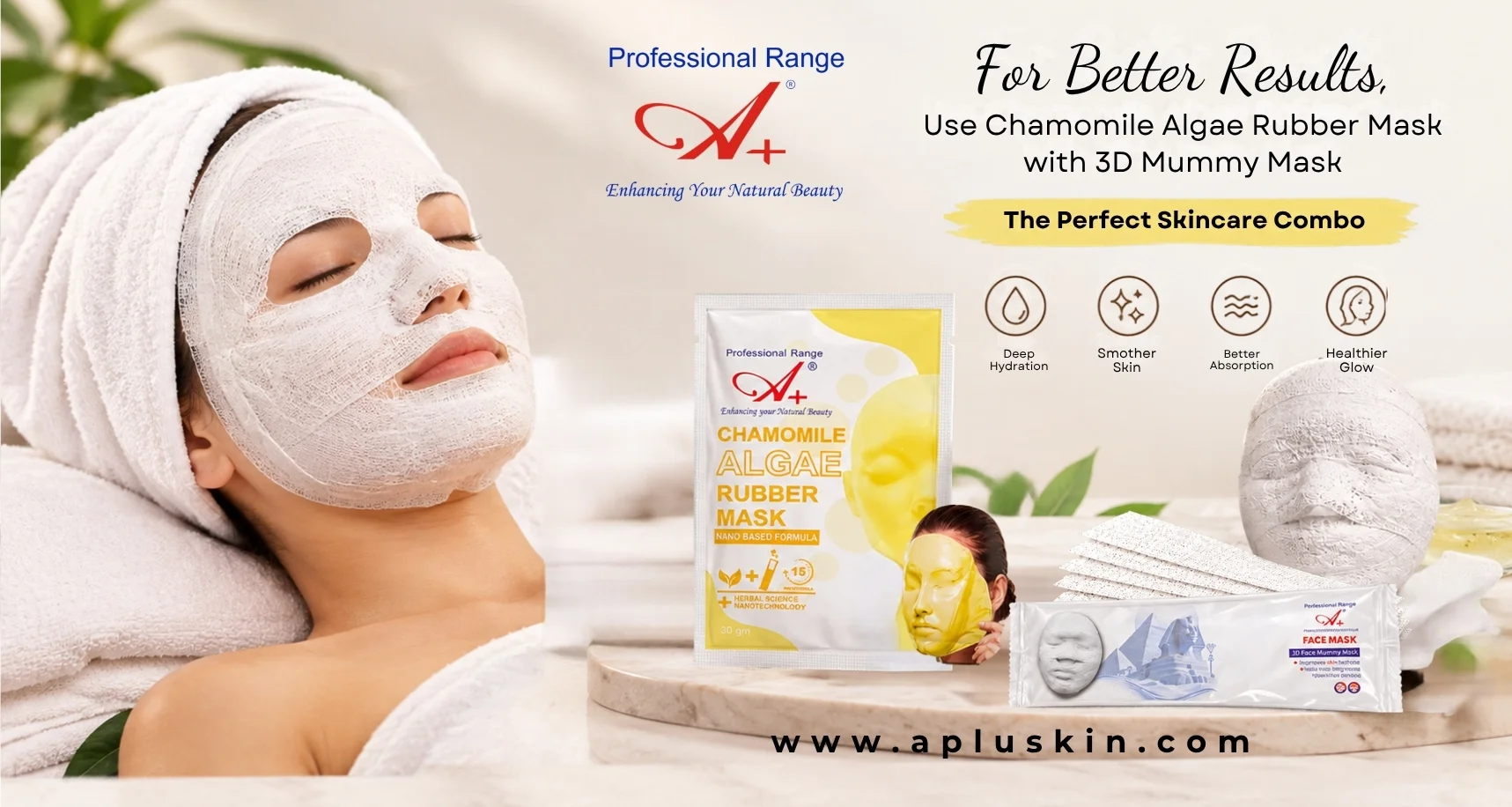
3D Mummy Mask and Chamomile Algae Rubber Face Mask
Professional facials are not simply about applying one product after another. The order, purpose, formulation, and compatibility of each step can significantly influence how the skin feels and looks after a facial. This is especially important when working with advanced mask treatments such as a 3D Mummy Mask and a Chamomile Algae Rubber Face Mask.
Both masks are designed around a different type of masking experience. A 3D Mummy Mask is generally associated with a water-activated plaster-style application that conforms closely to the contours of the face, while an algae rubber mask creates a flexible, occlusive layer over skincare products applied underneath.
Understanding the difference between these two mask types can help skincare professionals choose the right approach instead of assuming that using more products will automatically produce better results.
What Is a 3D Mummy Mask?
A 3D Mummy Mask is a facial mask designed to form closely around the contours of the face. Unlike conventional cream masks that remain spread over the surface, a water-activated plaster-style mask develops a moldable consistency before application and sets over the skin.
Its close-fitting structure allows the mask to remain in contact with areas such as the cheeks, jawline, and forehead. Some formulations can also produce a mild warming sensation while setting, which contributes to the distinctive professional facial experience.
The main purpose of this type of mask is not simply to add another layer of skincare. The physical structure of the mask can create a controlled masking environment in which the products underneath remain in close contact with the skin during the treatment.
This is one reason 3D masking has become an interesting option for professional facial protocols.
How Does a 3D Mummy Mask Work?
The concept is relatively simple.
Once the powder-based mask is activated with the recommended liquid, it develops a workable consistency. It is then applied over the treatment area and allowed to set.
As it sets, the mask creates a temporary layer over the face. This can help reduce evaporation from the skincare products beneath it and maintain a moist treatment environment for the duration of the masking step.
The mask also conforms to facial contours, which makes the treatment different from a standard sheet mask or wash-off mask.
However, it is important to understand that a masking treatment is only one part of a complete facial. Proper cleansing, preparation, and selection of compatible skincare products remain important.
Why Is the Preparation Step Important?
One of the most overlooked aspects of professional masking is skin preparation.
If the skin contains excessive oil, makeup residue, sunscreen, or surface impurities, the masking step may not provide the intended experience. Professional facial protocols therefore commonly begin with appropriate cleansing and preparation before moving to treatment products and masks.
The skin should also be assessed before selecting products.
For example, skin that is dry may require a different preparation strategy from oily skin, while easily reactive skin may require a much simpler and gentler protocol.
This is why a good facial should be treated as a skin-specific procedure rather than a fixed collection of products.
What Is a Chamomile Algae Rubber Face Mask?
An algae rubber face mask is different from a plaster-style 3D mask.
It typically starts as a powder that is mixed with a suitable liquid to form a smooth, flexible paste. After application, the mixture sets into a rubber-like layer that can generally be lifted away from the skin in one piece.
The flexible structure allows the mask to cover the face closely while helping maintain contact with the products underneath.
When formulated with chamomile, the treatment is particularly interesting for facial protocols where a soothing and comfortable masking step is preferred.
Chamomile is widely used in skincare because of its association with calming and skin-comforting formulations. However, individual skin responses can vary, so product compatibility and patch testing remain important considerations, particularly for sensitive skin.
3D Mummy Mask vs. Algae Rubber Mask
Although both are facial masks, their application and purpose are not identical.
| Feature | 3D Mummy Mask | Chamomile Algae Rubber Mask |
|---|---|---|
| Mask type | Water-activated plaster-style mask | Powder-to-rubber alginate-style mask |
| Texture before setting | Mouldable paste | Smooth, flexible paste |
| Texture after setting | Firm/set structure | Flexible rubber-like layer |
| Facial coverage | Designed to follow facial contours | Closely covers the treatment area |
| Treatment experience | Structured and intensive masking experience | Cooling, comfortable and occlusive masking experience |
| Typical professional use | Advanced facial protocols | Hydrating/soothing and finishing mask protocols |
The important point is that neither mask has to be viewed as a universal replacement for the other. The appropriate choice depends on the facial protocol, skin condition, products used underneath, and the desired treatment experience.
Can a 3D Mummy Mask Be Used With a Chamomile Algae Rubber Mask?
Using two different masks in the same facial requires more consideration than simply applying one over another.
A 3D Mummy Mask and an algae rubber mask both create substantial coverage over the skin. Applying one directly over another without a professionally designed protocol may not necessarily improve the result.
Instead, professionals should consider them as different masking options within a broader facial routine.
For example, one treatment may use the 3D Mummy Mask as the primary sculpted masking step, while another facial protocol may use a Chamomile Algae Rubber Mask as the finishing mask after appropriate serums or ampoules.
The decision should depend on the formulation, skin assessment, and manufacturer's recommended directions.
Why Chamomile Can Be Useful in a Masking Routine
Chamomile is a familiar botanical ingredient in skincare, particularly in products designed around skin comfort.
A chamomile-based mask can be useful when the goal of the masking step is to leave the skin feeling comfortable, refreshed, and conditioned after the earlier stages of a facial.
This is especially relevant because facial treatments may include multiple steps such as cleansing, exfoliation, massage, and targeted serums. The final masking stage can therefore be selected according to what the skin needs at that point in the treatment rather than simply choosing the most intensive product available.
A Chamomile Algae Rubber Face Mask can fit naturally into this type of professional approach because the rubber mask format provides close facial coverage while the chamomile-focused formulation supports a soothing treatment experience.
The Importance of Layering Products Correctly
Layering is often misunderstood in skincare.
More layers do not automatically mean better skincare. Every additional product introduces another formulation that needs to be compatible with the previous step.
A professional facial may follow a sequence such as:
Cleanse → Prepare → Exfoliate where appropriate → Targeted treatment → Massage where suitable → Serum/Ampoule → Mask → Finish
The exact sequence should always be adjusted according to the products being used and the individual's skin condition.
A mask can also change the environment around the products underneath it. Therefore, applying highly active or unsuitable products underneath an occlusive mask without understanding their intended use may cause unnecessary irritation.
Professional knowledge is just as important as the product itself.
Who Can Benefit From Professional Mask Treatments?
Mask treatments can be incorporated into many facial routines, but the choice should always begin with skin assessment.
A 3D Mummy Mask may appeal to clients looking for a structured, contour-focused facial experience, while a chamomile algae rubber mask can be considered when a more soothing and comfortable masking step is appropriate.
The important factors include:
- Current skin condition
- Sensitivity and reactivity
- Recent facial or exfoliation treatments
- Products being used underneath the mask
- Recommended contact time
- Correct mixing and application technique
- Post-treatment skincare
Professionals should also follow the manufacturer's instructions rather than extending application or contact time in an attempt to intensify the treatment.
Common Mistakes When Using Facial Masks
1. Applying a mask without preparing the skin
Masking over makeup, sunscreen, or surface impurities can interfere with the treatment process. Proper cleansing should generally come first.
2. Assuming all masks work the same way
A sheet mask, clay mask, plaster mask,k and algae rubber mask have very different physical properties. Their application methods and treatment purposes should not be treated as interchangeable.
3. Using too many active ingredients underneath
An occlusive mask can alter how skincare products remain in contact with the skin. Combining multiple strong actives without considering compatibility can increase the chance of discomfort.
4. Ignoring the skin's current condition
A client's skin can behave differently from one facial appointment to another. Recent exfoliation, dryness, sensitivity, ty or other changes should be considered before choosing the treatment.
5. Treating the mask as the entire facial
A professional result depends on the complete protocol—not just the final mask. Preparation, product selection, application technique, and aftercare all contribute to the overall experience.
Common Mistakes When Using Facial Masks
1. Applying a mask without preparing the skin
Masking over makeup, sunscreen, or surface impurities can interfere with the treatment process. Proper cleansing should generally come first.
2. Assuming all masks work the same way
A sheet mask, clay mask, plaster mask,k and algae rubber mask have very different physical properties. Their application methods and treatment purposes should not be treated as interchangeable.
3. Using too many active ingredients underneath
An occlusive mask can alter how skincare products remain in contact with the skin. Combining multiple strong actives without considering compatibility can increase the chance of discomfort.
4. Ignoring the skin's current condition
A client's skin can behave differently from one facial appointment to another. Recent exfoliation, dryness, sensitivity, ty or other changes should be considered before choosing the treatment.
5. Treating the mask as the entire facial
A professional result depends on the complete protocol—not just the final mask. Preparation, product selection, application technique, and aftercare all contribute to the overall experience.
How to Get More From a Professional Facial Mask
The best approach is to focus on compatibility rather than intensity.
If a 3D Mummy Mask is being used, the products underneath should be selected according to the manufacturer's instructions and the client's skin requirements. Similarly, a Chamomile Algae Rubber Face Mask should be mixed and applied correctly so that it forms the intended flexible layer.
Application thickness, mixing consistency, and removal technique can all affect the experience.
For salon and clinic professionals, maintaining consistent procedures is particularly useful. When the same protocol is followed correctly, it becomes easier to understand how the skin responds and make appropriate adjustments during future treatments.
Where A 3D Mummy Mask Fits Into Modern Facial Care
The growing interest in 3D facial masks reflects a broader shift toward treatment experiences that combine skincare formulations with innovative application techniques.
A product such as the A+ 3D Mummy Mask uses a water-activated plaster-style format designed to form closely around facial contours. Its distinctive application makes it suitable for professionals who want to introduce a more specialised masking step into facial protocols.
On the other hand, a Chamomile Algae Rubber Face Mask can be considered when the treatment calls for a flexible, close-contact mask with a chamomile-focused skincare experience.
Rather than asking which mask is universally better, it is more useful to ask:
What does the skin need at this stage of the facial, and which mask format is most appropriate for that purpose?
That simple shift in thinking can make facial treatments more structured, controlled, and professional.
Final Thoughts
A 3D Mummy Mask and a Chamomile Algae Rubber Face Mask represent two different approaches to professional facial masking.
The 3D Mummy Mask focuses on a moulded, contour-following masking experience, while an algae rubber mask provides a flexible covering that can complement serums, ampoules and other compatible treatment products underneath.
The key is not to use the most products possible. Instead, an effective facial routine should be built around skin assessment, correct product selection, appropriate sequencing and proper application technique.
For professionals, understanding how and why a mask works is ultimately more valuable than simply knowing how to apply it. When the right mask is paired with the right facial protocol, the treatment becomes more purposeful—and the client gets a skincare experience that is both informed and carefully tailored to their needs.
FAQs
Can a 3D Mummy Mask be used in a salon facial?
Yes. A 3D Mummy Mask can be incorporated into professional facial protocols when used according to the product's directions and appropriate skin assessment.
Is an algae rubber mask the same as a 3D Mummy Mask?
No. They have different formulations, textures, and setting characteristics. A 3D Mummy Mask typically forms a firmer moulded layer, while an algae rubber mask forms a flexible rubber-like layer.
Why is chamomile used in face masks?
Chamomile is commonly used in skincare formulations intended to provide a soothing and comfortable skin experience.
Can I apply any serum underneath a rubber mask?
Not necessarily. The compatibility of the serum with the mask and the skin should be considered first. Always follow the manufacturer's directions.
Should facial masks be selected according to skin type?
Yes. Skin type, current skin condition, sensitivity, previous treatments, and the rest of the facial protocol should all be considered before selecting a mask.
Is a professional facial only about the mask?
No. Cleansing, preparation, exfoliation when appropriate, treatment products, massage where suitable, maskin,g and aftercare all contribute to the overall facial protocol.